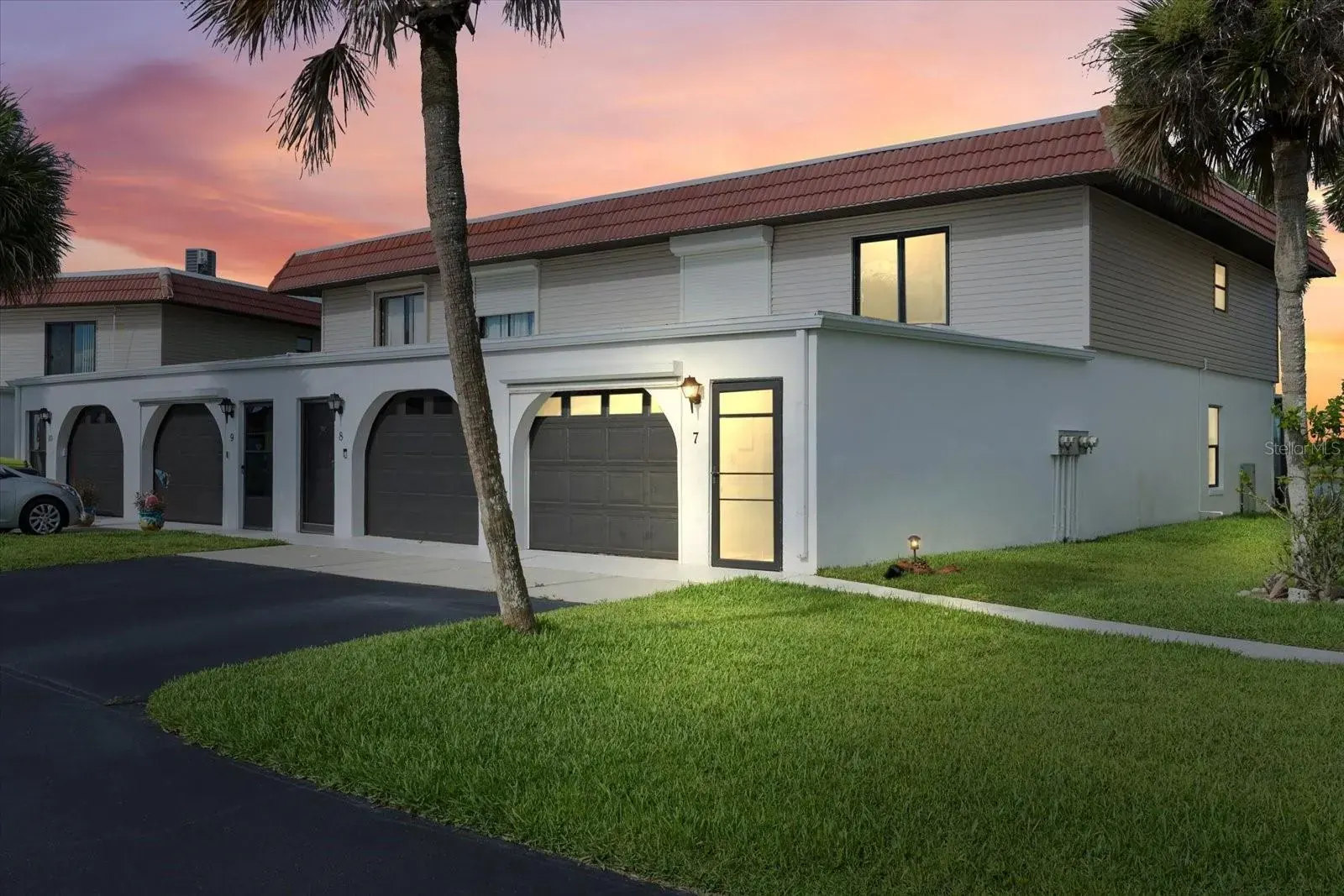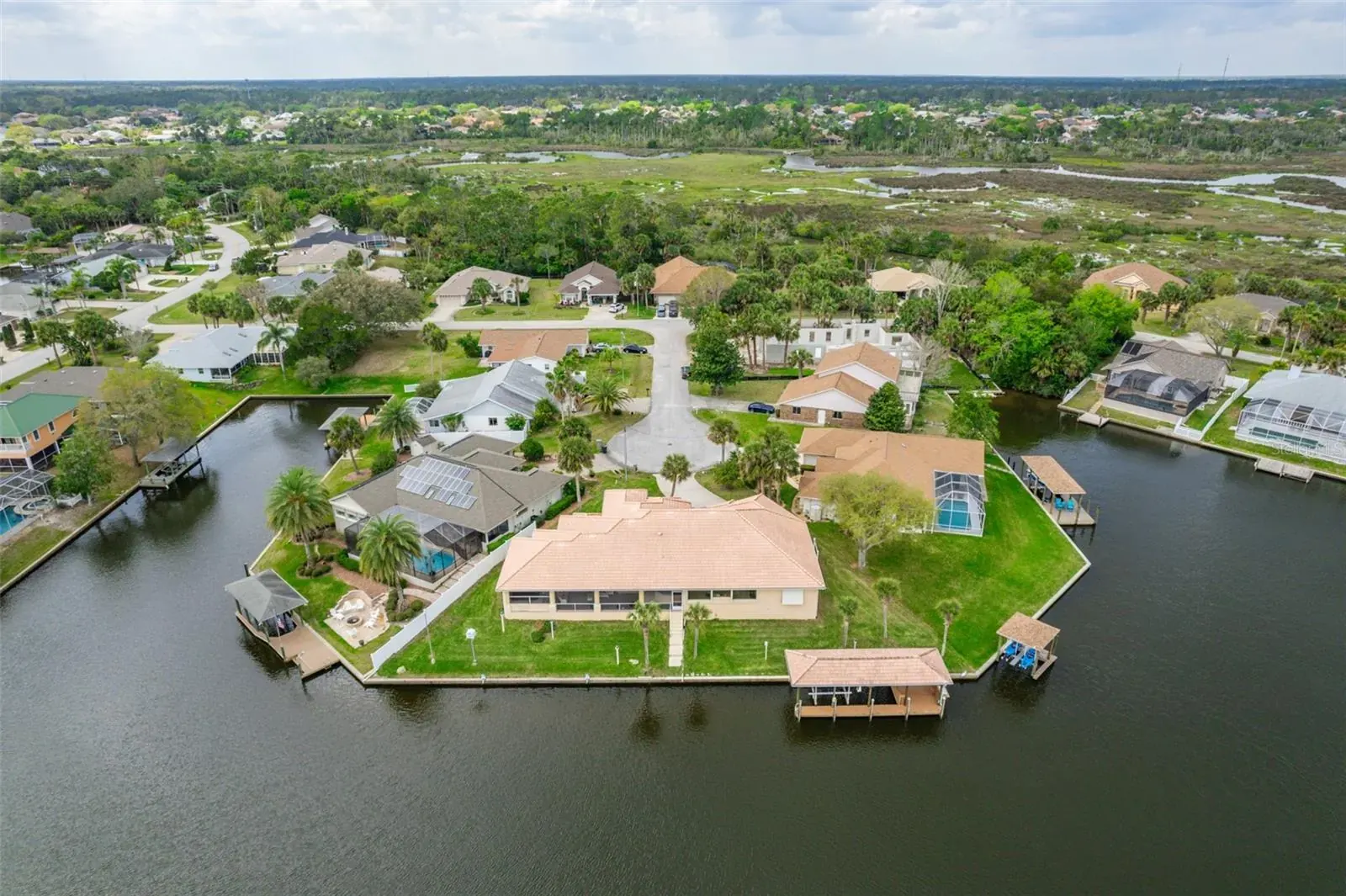
At a Palm Coast City Council meeting in 2025, a resident stood up during public comment and said something that should stop any canal-front buyer mid-scroll: "My neighbors, many of them, can't even get their boats off their docks." He wasn't talking about a broken lift or a bad weekend tide. He was describing a structural problem with the very feature that makes these homes worth a premium in the first place.
If you're comparing a canal address in Palm Coast against an inland lot, the listing photos will show you water, a dock, maybe a boat. What they won't show you is a decades-old maintenance gap that the city is only now trying to solve, and a bill that hasn't been assigned to anyone yet. That's the part worth understanding before you write an offer.
An Amenity the City Never Maintained
Palm Coast's saltwater canals were dug in the 1960s and 1970s as part of the original ITT-era master plan, decades before the city incorporated. They're the reason certain sections of Palm Coast, especially the C Section and parts of the F Section in Palm Harbor, including the no-bridge canals known as Sailboat Country, command higher prices than the rest of the city. Roughly 2,500 homes back up to these canals today, and for most of the last 50 years, that backyard water access was treated as a permanent, self-sustaining feature. It wasn't.
A bathymetric study commissioned by the city and completed by Taylor Engineering found that the canals were originally cut to a depth of about 9 feet. By 2023, about 13 of the system's 26 miles had silted in to under 6 feet at the centerline. Palm Coast's own stormwater engineer told the council there are no records of the canals ever being dredged, not once, in the system's entire history.
That gap between "originally built to 9 feet" and "now under 6 feet in about half the network" is the whole story. It's why boats are scraping bottom at low tide in some stretches, and why the city is now designing a dredging project, estimated at about $13.8 million for the option the council chose, with no dedicated funding source yet to pay for construction.
Sailboat Country, Bridges, and What the Premium Actually Buys
Not every canal in Palm Coast delivers the same thing, and the distinction matters more than most out-of-town buyers realize. The defining feature of Sailboat Country, canal sections 14 and 15 east of Palm Harbor Parkway, is that boats can reach the Intracoastal Waterway without passing under a fixed bridge. That's what lets larger sailboats and cruisers get in and out without worrying about mast clearance. Motorboat Country canals elsewhere in the system still connect to the Intracoastal, but through routes with lower bridges that cap the size of vessel you can run.
Palm Coast's own salt water canal system is broken into numbered sections, specifically sections 2, 3, 4, 5, 6, 14, 15, and 16, and there are four bridges across the whole network, three of them clustered in section 16 at Colorado, Colchester, and the Yacht Club, according to the CENTURY 21 Fine Homes & Estates Realty Exchange canal guide. If you're touring a canal home, the section number and bridge situation tell you more about the property's real boating value than the listing description ever will.
That access is worth real money. Canal-front homes in Palm Coast routinely sell above the area's broader median, which was $390,000 for a single-family home in Flagler County in August 2026, flat from a year earlier. But the premium isn't only paid at closing. Council member Theresa Carli Pontieri, who was serving as vice mayor in 2025, pointed out that the annual property tax bill on a canal-front home in Palm Coast runs nearly double what non-waterfront owners pay elsewhere in the city. That's not a one-time cost. It's a recurring one you're signing up for every year you own the home, on top of whatever premium you paid to get in.
The Bill Nobody Has Written Yet
Here's the part that doesn't show up in any listing sheet. The city has been studying a canal dredging project for several years now, and the options engineers presented in May 2025 ranged from about $3.7 million to dredge every canal to 7 feet to $28 million to take them all to 9 feet. The option the council chose was estimated at $13.8 million. There is currently no funding mechanism in place to pay for it. Unlike the freshwater canal system, which is supported by an existing stormwater fee, the saltwater canals have no comparable revenue source.
In a November 2024 city survey, 75 percent of respondents agreed that dredging is necessary to preserve the canals, but only 52 percent supported a special assessment specifically on canal-front homeowners to help pay for it. That split is exactly the tension the council has been wrestling with in public meetings: dredging benefits the people who live on the water most directly, but it's expensive enough that spreading the cost citywide raises its own fairness questions.
Council member Ty Miller put it plainly during a 2025 council discussion, saying the more affordable of the funding options on the table would still "hurt and cost money" and require shifting funds from somewhere else in the budget. The council gave consensus to move forward with a design phase under what's been called Option 3, folded into the city's Strategic Action Plan adopted in May 2025, and the council approved funding for that design work on October 21, 2025. Design and permitting began in January 2026 and is expected to run into fiscal year 2027.
None of that is resolved yet. No dredging has started. No special assessment has been formally adopted. What exists right now is a documented, city-acknowledged maintenance gap, a wide cost estimate, and an open political question about who pays for it. If you buy a canal home this year, you're buying into that conversation, whether or not it comes up during your walkthrough.
Canal vs. Inland: What You're Actually Comparing
| Canal-front (F/C Section) | Inland sections | |
|---|---|---|
| Property tax load | Nearly double comparable inland homes, per Pontieri's 2025 council remarks | Standard city rate |
| Water depth | As shallow as under 6 feet in some stretches (2023 survey) | Not applicable |
| Boating access | No-fixed-bridge routes in Sailboat Country; bridged routes elsewhere | None |
| Pending cost exposure | Possible future special assessment tied to dredging | None currently proposed |
| City maintenance history | No recorded dredging since canals were dug in the 1960s-70s | Covered by existing stormwater fee |
What This Means If You're Shopping a Canal Address This Year
None of this means canal living isn't worth it. Thousands of families have built a life around backyard boat access here for decades, and for the right buyer, that lifestyle is the whole point of moving to Palm Coast. But the diligence checklist for a canal home should look different from the one for a standard resale, and most buyers coming from out of state don't know to ask these questions until it's too late to negotiate around them.
- Ask which numbered canal section the home sits on, and whether it connects to Sailboat Country or a bridged route to the Intracoastal.
- Request the actual water depth at the dock, not just the canal frontage footage listed in the MLS.
- Compare the home's most recent property tax bill against a similar inland property before you finalize your budget, not after.
- Ask directly about seawall condition and any known shoaling near the property, since the 2023 study found the problems concentrated in specific stretches rather than evenly across the whole system.
- Track the city's canal updates. Design and permitting started in January 2026, and staff are due to bring funding options back to the council, so any special assessment will be debated in a public council meeting before it shows up in a closing disclosure.
A Few Direct Questions
Is Palm Coast actually dredging the canals right now? Not yet. Design and permitting for the council's chosen option began in January 2026, and the city says it has no active dredging permits yet. Construction hasn't been funded or scheduled as of this writing.
Will I be on the hook for a special assessment if I buy a canal home today? No assessment has been adopted. The question is still being debated publicly, and a 2024 survey showed residents split on whether canal-front owners specifically should bear the cost.
Which parts of Palm Coast actually have saltwater canal access? The saltwater canals run through the C Section and parts of the F Section in Palm Harbor, in numbered canal sections 2 through 6 and 14 through 16. Sections 14 and 15 are the no-bridge canals known as Sailboat Country.
If you're weighing a canal-front purchase against an inland home in Palm Coast, the sale price is the easy part to compare. The tax bill, the depth at the dock, and the direction of a city budget vote are the parts that actually determine what you're getting into. That's exactly the kind of local mechanics David Stanley walks buyers through before they write an offer, not after. Get your free home valuation and let's talk through what a specific canal address is really worth today.
New articles by email
Get my new articles every Saturday
One short email a week with what I posted: Palm Coast news, local events, community guides and the market. No new articles, no email.

About the Author
David Stanley is a Broker Associate with CENTURY 21 Fine Homes & Estates Realty Exchange and has lived in North Florida for 23 years. A former Flagler Beach Ocean Rescue lifeguard and firefighter, he has closed over $60 million in Palm Coast-area sales.
More about David · Pick a time to talk