If you live off a dirt road near Bunnell, you know one heavy rain can turn a smooth drive into ruts overnight. It is part of the rural charm, but it does not have to be a constant headache. In this guide, you will learn what causes wear and tear, how to keep your driveway and access reliable, and a seasonal checklist built for Flagler County weather. You will also see when to call in pros and how to plan for safe, year‑round vehicle access. Let’s dive in.
Know who maintains your road
Before you plan any repairs, confirm whether the road in front of your property is public or private. In Flagler County, public roads within a county right of way are typically handled by county crews. Private roads and driveways are usually the responsibility of property owners or an association.
You can verify status through Flagler County Public Works, county GIS and parcel maps, and your deed or subdivision covenants. For hazards or blocked access on a public road, contact Flagler County Public Works or emergency services. If you plan to alter drainage, such as adding a culvert or rerouting a ditch, check county permitting rules and state environmental requirements first.
What wears out dirt roads near Bunnell
Unpaved roads around Bunnell and rural pockets like Daytona North face Florida‑specific stresses.
- Wet season and storms. The wet season generally runs from June through November, with peak late summer and fall. Intense rainfall can cause erosion, potholes, rutting, and washouts.
- Sandy soils and high groundwater. Local soils can saturate quickly, which makes the road base less stable than harder, clay‑rich soils.
- Traffic and heavy loads. Frequent trips, delivery trucks, and construction vehicles speed up potholes and corrugation, often called washboarding.
- Vegetation and wildlife. Brush and roots can creep into the roadbed and trap water. Burrowing animals may undermine edges.
- Drainage issues. A lost crown, clogged ditches, or undersized culverts keep water on the surface, which quickly breaks down the top layer.
Driveway and private road upkeep
Grade for a crown
A small crown lets water shed to the sides instead of pooling in the wheel tracks. Aim for a cross slope of about 2 to 5 percent. Touch up grading seasonally and after major storms to keep the shape intact and prevent standing water.
Build a better base
A compacted base with added aggregate improves load‑bearing capacity. Many Flagler County owners use crushed stone or limestone. In soft or low areas, a geotextile fabric under the base helps resist mixing with sandy soils. Plan to topdress as needed every one to five years depending on traffic and storm exposure.
Keep water moving
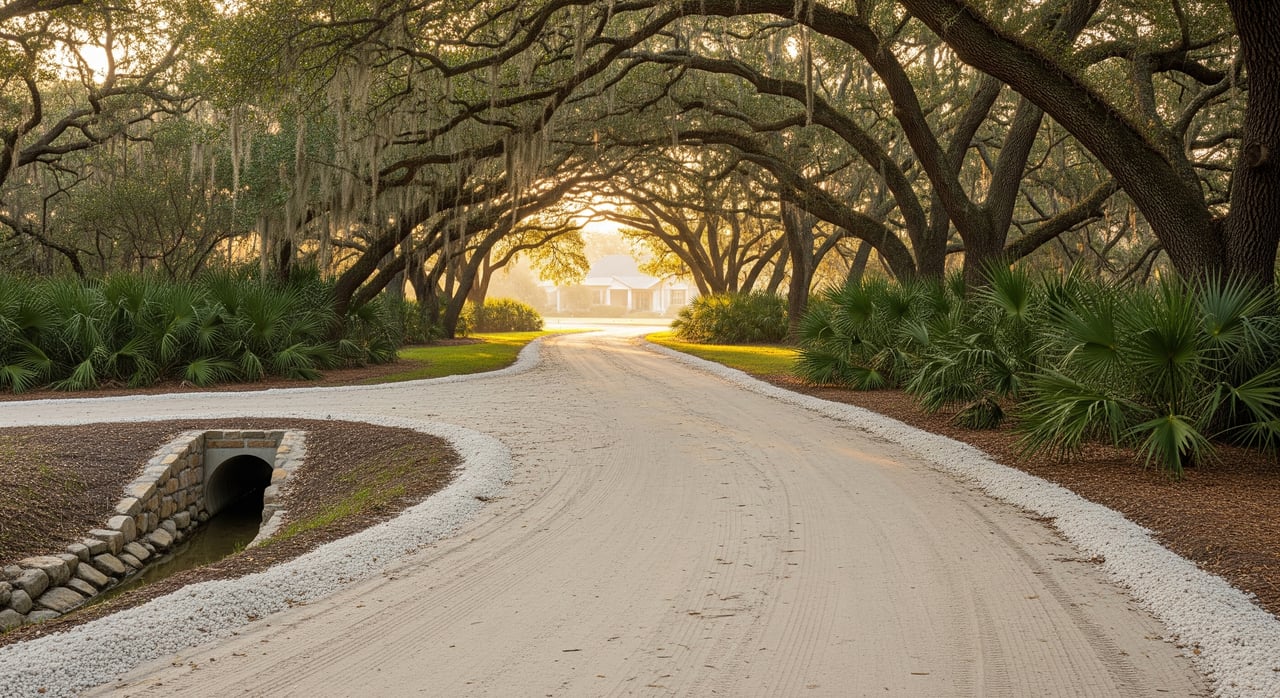
Water is the enemy of unpaved roads. Keep driveway and roadside culverts clear at both the inlet and outlet. Maintain ditches and shallow swales so water flows away from the roadbed. Where a culvert discharges on a slope, protect the outfall with rock or vegetation to curb erosion.
Stabilize edges and manage vegetation
Edge collapse starts when tires break down the shoulder. Build shoulders with compacted material and keep brush trimmed. This widens the usable surface, improves sight lines, and helps water escape instead of ponding.
Control dust in dry months
Dust increases as the surface dries and fines loosen. Regular compaction and light watering can help. Some owners use dust‑control products approved for local conditions. Always check environmental guidance before applying any chemical treatments.
When to call a pro
Bring in experienced contractors for major regrading, culvert installation or replacement, slope stabilization, or erosion repair. Any work that could alter drainage or affect wetlands may require county or state permits, so verify requirements before you start.
Vehicle access and safety
Choosing and preparing your vehicle
Many passenger vehicles can handle a well‑maintained dirt road, especially in dry weather. During wet months or on uneven sections, vehicles with higher ground clearance and good traction, such as AWD or 4WD, offer more confidence. Keep tires properly inflated with good tread, especially if you carry heavier loads.
Seasonal driving habits
Avoid driving on saturated, rutted sections when you can. Traffic on a wet surface cuts deep ruts that are costly to fix. Carry simple recovery gear if you travel remote stretches, such as a tow strap, shovel, traction mats, and a charged phone.
Keep emergency access open
Make sure private roads and driveways meet local recommendations for width, turning radius, and surface stability so emergency vehicles can reach your home. Your county or fire‑rescue department can advise on access standards and signage.
Insurance and liability basics
If a private road is poorly maintained, owners or an association may bear liability for accidents tied to the road’s condition. Review your homeowner policy and local ordinances, and address hazards quickly.
Flagler County seasonal checklist
Pre‑wet season: April to May
- Inspect your road and driveway for low spots, blocked culverts, and worn edges.
- Clear debris from ditches and culvert inlets and outlets. Trim brush along shoulders.
- Re‑establish the crown, fill and compact potholes, and shore up soft edges.
- Add fresh aggregate to vulnerable sections before the heavy rains arrive.
- Confirm permits if you plan to change drainage or install new culverts.
Wet season: June to November
- After heavy rains or tropical systems, inspect for washouts, new ruts, and culvert blockages.
- Address safety risks right away, such as undermined edges or blocked crossings.
- Limit heavy traffic on saturated surfaces to avoid deep rutting.
- Keep contact numbers for county public works and utility services handy. Document damage if a storm impacts your area.
Post‑storm and hurricane recovery
- Clear debris from the roadway and culvert inlets and outlets first for safe passage.
- Check for culvert, bridge, or slope damage and stabilize exposed soil.
- Coordinate with the county if a public road is blocked. Hire qualified contractors for private road repairs.
Dry season: December to March
- Regrade to eliminate washboarding and restore a smooth crown.
- Plan long‑term projects, such as base stabilization or new culverts, when conditions are dry.
- Evaluate dust issues and consider compaction or approved dust‑control measures.
Budget and hiring tips
Costs vary widely based on scope. Simple grading may be relatively inexpensive per visit, while adding large amounts of gravel, installing culverts, or building up a base can reach several thousand dollars or more. Frequency matters, so a modest, routine plan often beats emergency fixes.
When you solicit bids, ask contractors about equipment, materials, and local experience with unpaved roads. Request references, proof of insurance, and clarity on grading frequency, material types, and culvert sizes. Get multiple quotes and a written scope so you can compare apples to apples.
Selling or buying on a dirt road
If you plan to sell, show buyers that access is reliable. A recent grading, clear culverts, and tidy shoulders make a strong first impression. Share what you know about road status, typical maintenance, and any agreements with neighbors.
If you are buying, verify whether the road is public or private with Flagler County before you fall in love with the property. Ask about drainage patterns, culvert sizes, and past storm performance. Build maintenance into your budget, especially in rural pockets near Bunnell where unpaved roads are common.
Ready to talk through a dirt road property near Bunnell or Flagler County and how maintenance can impact value and days on market? Connect with Unknown Company to discuss your goals or get your free home valuation.
FAQs
Who maintains a dirt road near my home in Bunnell?
- Confirm with Flagler County Public Works, county GIS and parcel maps, and your deed or subdivision covenants to see if it is public or private.
How often should I grade a dirt driveway in Flagler County?
- Plan for seasonal grading one to several times per year, plus extra touch‑ups after heavy rains or high traffic.
Will adding gravel fix my driveway problems near Daytona North?
- Gravel helps, but you also need a proper crown, compaction, drainage, and edge stabilization for long‑term results.
Do I need a permit to install a new driveway culvert in Flagler County?
- You might; changes that affect stormwater or wetlands can require county or state permits, so check before you start.
What vehicle is best for wet‑season dirt roads around Bunnell?
- Many vehicles work on well‑maintained roads, but higher clearance and AWD or 4WD offer more traction and confidence when conditions are wet.
How can I keep emergency vehicles from getting blocked at my property?
- Maintain adequate width and a stable surface, keep turns clear, and consult local fire‑rescue for recommended access and signage.