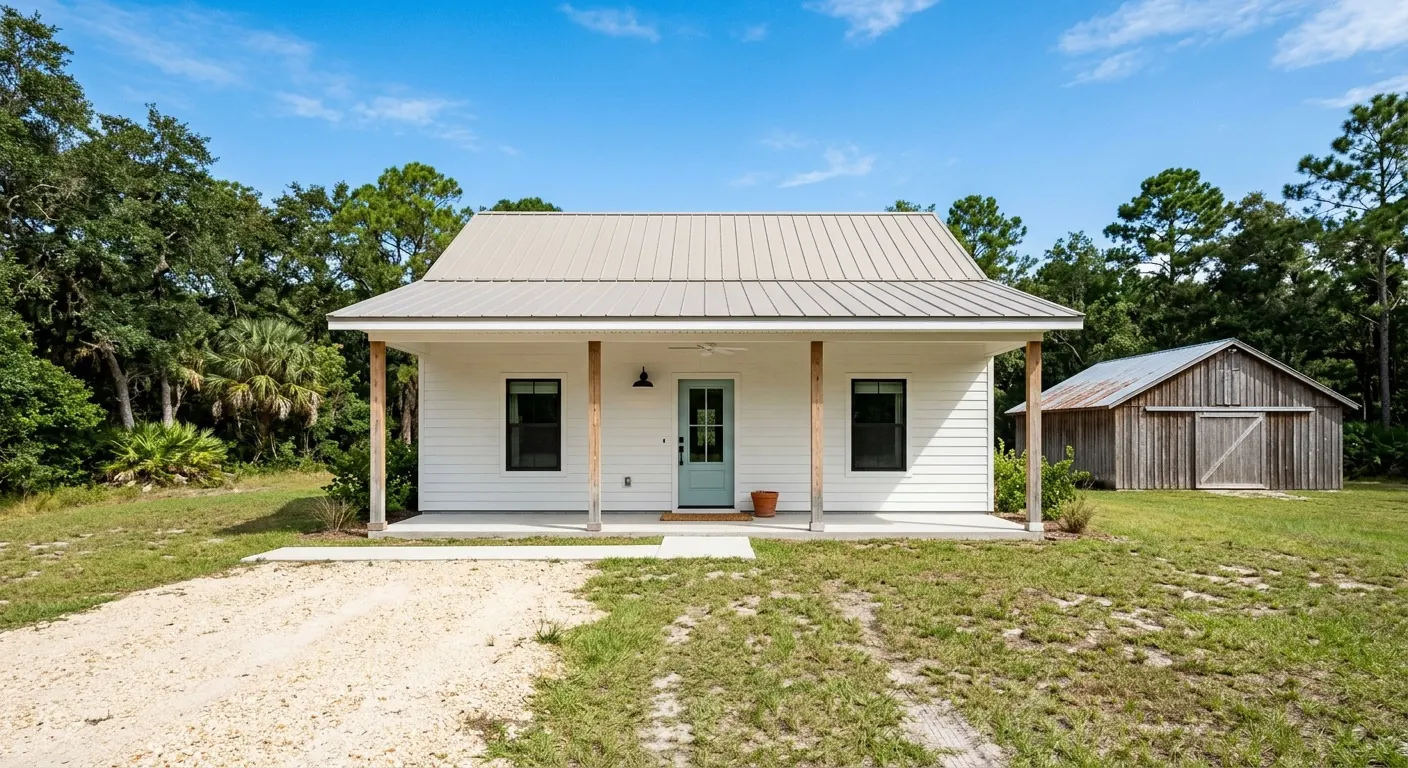
Ready for wide-open skies, room for a workshop, and space to breathe? Buying acreage near Hastings can deliver that country lifestyle, but rural property has different rules than a typical neighborhood lot. In this guide, you’ll learn how to vet zoning, utilities, access, flood risks, and tax treatment so you can buy with confidence.
Know who regulates land in Hastings
Hastings is a small, historically agricultural community in southwestern St. Johns County. Voters dissolved the former Town of Hastings, and the area is now administered by St. Johns County. You can read the local background on the area’s history and governance in the Hastings overview on Wikipedia.
For permits, zoning, and development standards, St. Johns County is your primary authority. The county’s consolidated Land Development Code controls lot sizes, allowed uses, access, and environmental protections. Start any search by confirming rules for your specific parcel in the county’s Land Development Code.
- Local context: Hastings community background
- County rules: St. Johns County Land Development Code
Zoning and lot size basics
Before you fall in love with a property, confirm its zoning and minimum lot standards. In much of the rural Hastings area, parcels are commonly in the Open Rural (OR) zoning district.
- OR lot minimums: The dimensional schedule in Article VI of the Land Development Code shows a typical minimum lot area of 1.0 acre for a single-family dwelling, with at least 100 feet of frontage. Always verify the parcel’s zoning on the county’s Official Zoning Atlas.
- Utilities affect lot size: For new residential subdivisions, the county uses a utilities-based table (also in Article VI) that sets different minimums depending on water and sewer availability. Examples:
- Private well + private septic: 1.0 acre minimum and 100-foot width.
- Central water + private septic: 0.5 acre minimum and 100-foot width.
- Private well + central wastewater: 0.25 acre minimum and 75-foot width.
- Special rural uses: Some rural or agricultural-related uses require larger parcels. For instance, “Rural Industry” uses must be on parcels of at least three acres under Article II. Check the permitted-use table for the zoning that applies to your property.
What this means for you
Minimums can change with utilities and use. Do not assume a smaller lot can be split, or that a large parcel can host multiple uses, without checking the exact zoning district and the utility situation. If you plan to subdivide or add structures, confirm the standards in Article VI and the permitted-use rules in Article II before you go under contract.
Confirm allowed uses, animals, and structures
Country living often includes gardens, small-scale agriculture, or keeping animals. That said, permitted activities, animal housing, and farm structures are regulated by zoning and specific standards in Article II of the LDC.
- Verify whether your zoning allows small-scale agriculture or accessory uses.
- Review setbacks and buffering for animal housing or kennels.
- Confirm siting limits for structures near wetlands or buffers.
Never assume an existing barn, corral, or kennel is legal for your intended use without checking the recorded permits and LDC provisions.
Utilities, wells, and septic
Rural parcels may be served by central utilities or may require private well and septic systems. Lot size, buildability, and cost can all hinge on utility access.
Central water and sewer
St. Johns County Utilities explains how to verify service areas and apply for new water or sewer taps. Start by confirming whether a parcel is within a service area and whether a connection is required when mains are nearby. The county also has Hastings Water Treatment Plant upgrades underway, with construction that began in January 2025 to improve capacity and distribution. That may affect the feasibility, timeline, and cost of connecting in and around Hastings. Learn about hookups and fees on the St. Johns County Utilities water and sewer service page.
Private well and onsite septic
If central utilities are not available, you will likely need a private well and an onsite sewage system. Onsite sewage (septic) is governed by Florida law and administered locally. State statutes and Department of Environmental Protection rules set siting and permitting standards, and local rules can require mandatory connections when central mains are close by. Review the state-level framework in Florida Statutes, section 381.0065 and confirm with the county health department whether an existing system is permitted, how repairs are handled, and what will be required for a new system.
Access, private roads, and easements
Legal access is essential for financing and permits. Where access is by shared or private road, the county sets minimum widths, surface standards, turnarounds, and usually requires a recorded maintenance agreement.
- Confirm recorded access on the deed, plat, or a properly recorded easement.
- If access crosses a neighbor’s land, the easement must be recorded and enforceable.
- For private roads or HOA-maintained roads, obtain the maintenance obligations and cost history.
The design and access standards are detailed in Article VI of the Land Development Code. A missing or unrecorded access agreement is a common deal-breaker, so surface this early in due diligence.
Environmental checks early
Before moving forward, evaluate flood risk, wetlands, and soils. These conditions affect building, insurance, and septic feasibility.
Flood zones and elevation
Use the FEMA Flood Map Service Center to look up the parcel by address and generate a FIRMette. Note the flood zone (AE, AO, VE, X), panel date, and any base flood elevation. Flood zone can influence foundation requirements and insurance.
Wetlands and soils
If a parcel includes mapped wetlands or hydric soils, you may need a professional wetland delineation and permits before disturbing land. St. Johns County coordinates with state and regional agencies, and the environmental standards are outlined in Article V of the LDC. For septic readiness, plan a soils review and site-specific evaluation; marginal soils may require engineered systems with higher costs and maintenance.
Taxes and the agricultural classification
If you plan bona fide commercial agriculture, the St. Johns County Property Appraiser offers an Agricultural classification that can reduce assessed value for land in genuine commercial use. This is not a full tax exemption, and it requires documentation and a timely application, typically due by March 1 each year.
- Hobby farms and personal-use activities generally do not qualify.
- The appraiser considers factors like sales, size, continuity, labor, and business documentation.
Get the guidelines and application steps from the Property Appraiser’s Agricultural Classification page.
Your Hastings acreage due-diligence checklist
Use this practical checklist to move from dream to done:
- Confirm parcel zoning and Future Land Use Map category, then read the permitted uses and special-use triggers for that district in the LDC.
- Verify legal access. Obtain recorded deeds, plats, or easements, and any private road maintenance agreements. See access standards in LDC Article VI.
- Ask St. Johns County Utilities whether central water or sewer mains are available at the property line, and what connection or impact fees apply. If not available, confirm well and septic requirements with the local health authority.
- Order a current boundary survey that shows easements, possible encroachments, and access. Pair this with a title search for recorded restrictions.
- Check flood risk on FEMA’s Map Service Center and, if indicated, plan for an Elevation Certificate and foundation implications.
- Commission a soils and septic-site evaluation if an onsite system will be required.
- Screen for wetlands or other protected resources that may trigger state or regional permits.
- Review current property tax treatment. If pursuing Agricultural classification after closing, note documentation needs and the application deadline.
How a local agent helps you move faster
A knowledgeable local agent streamlines the process and reduces risk by front-loading the right questions and contacts.
- Pulls county parcel and GIS data, zoning and FLUM layers, and recorded documents to validate use and access.
- Confirms utility availability and fees with St. Johns County Utilities, and checks for any open code or permitting items.
- Coordinates specialists for survey, soils and septic evaluation, and wetland delineation when needed, so you can make decisions with confidence.
When you are ready to explore acreage or country property around Hastings, you deserve a guide who knows the rules, the land, and the steps that protect your purchase. If you want a straightforward path from search to closing, reach out to David Stanley for a no-pressure consultation.
FAQs
What lot size do I need to build a home on Hastings acreage?
- In many rural parts of St. Johns County, Open Rural lots developed for a single-family home typically require at least 1.0 acre and 100 feet of frontage under Article VI. Utility availability can change minimums for new subdivisions.
How do utilities affect whether I can split land?
- For new residential subdivisions, minimum lot size depends on utilities. A property relying on private well and septic usually needs at least 1.0 acre, while parcels on central water or sewer can have smaller minimums. Always confirm the current standard with the county.
Do I have to connect to central water if a main is nearby?
- It depends on location and local rules. St. Johns County may require connection when mains are within a set distance. Contact St. Johns County Utilities to verify service availability, connection requirements, and fees.
What counts as legal access for a rural parcel?
- The county expects recorded, enforceable access. That can be frontage on a public road or a properly recorded easement meeting county standards, often with a maintenance agreement for shared or private roads.
Will a small hobby farm qualify for agricultural tax status?
- Generally no. The Agricultural classification is for bona fide commercial agricultural use and requires documentation like sales, continuity, and operational records. Review the Property Appraiser’s guidelines before applying.
How do I check flood risk for a Hastings property?
- Look up the address on FEMA’s Flood Map Service Center to find the flood zone, panel date, and any base flood elevation. This helps you understand building and insurance implications.
New articles by email
Get my new articles every Saturday
One short email a week with what I posted: Palm Coast news, local events, community guides and the market. No new articles, no email.

About the Author
David Stanley is a Broker Associate with CENTURY 21 Fine Homes & Estates Realty Exchange and has lived in North Florida for 23 years. A former Flagler Beach Ocean Rescue lifeguard and firefighter, he has closed over $60 million in Palm Coast-area sales.
More about David · Pick a time to talk