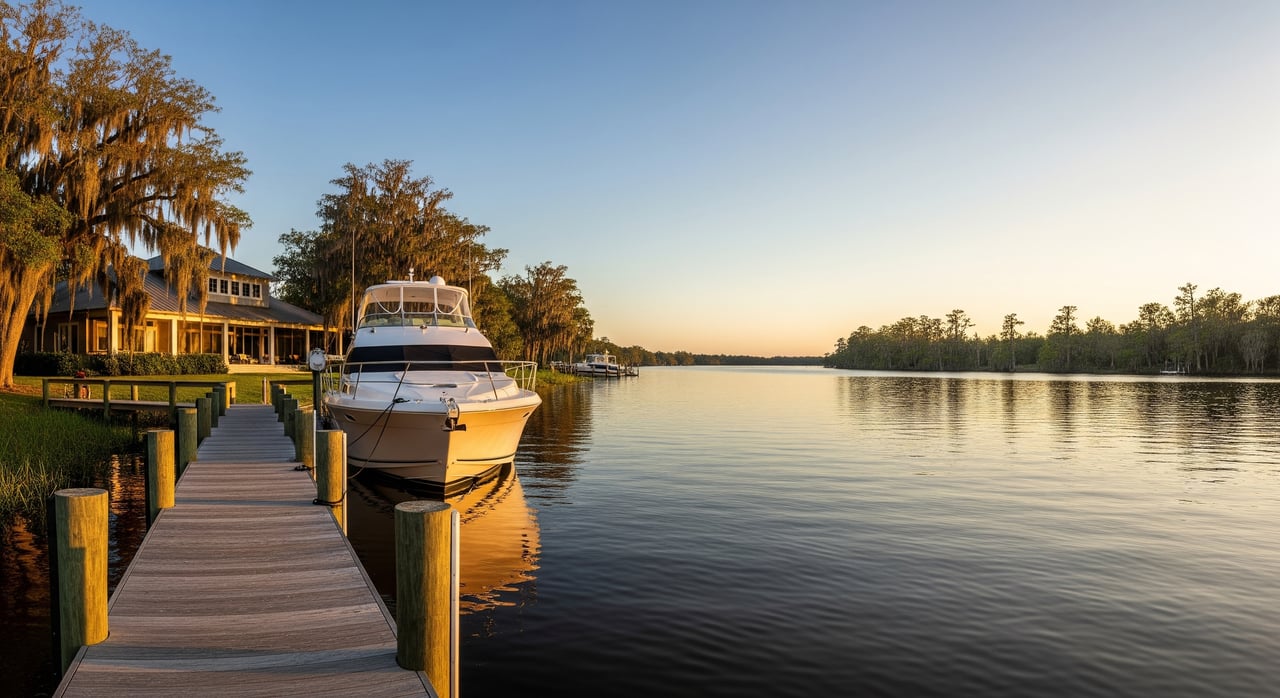
If your happy place is behind the helm, Palatka’s stretch of the St. Johns River feels like it was made for you. You get big-river scenery, freshwater fishing, and slow-moving water that welcomes everything from skiffs to cruisers. At the same time, buying or selling on the river comes with unique questions about docks, permits, flood zones, and boat logistics. This guide gives you clear, local insight so you can enjoy the boating lifestyle and protect your investment. Let’s dive in.
Why Palatka works for boaters
Palatka sits on the St. Johns River, one of the few major U.S. rivers that flows north. That matters for planning trips because “upstream” often means heading south and “downstream” heads north toward the coast. The river here is wide and generally slow, with tidal influence that can nudge water levels and current direction.
You can fish, day cruise, or paddle from your backyard in many parts of Putnam County. Seasonal wildlife viewing and access to riverfront parks add to the appeal. Expect mostly freshwater conditions in this area, with vegetation and water clarity that shift with rainfall.
Where to launch, fuel, and dock
You’ll find a mix of public ramps, municipal docks, and private marinas along the St. Johns through Putnam County. Services vary by location, so call ahead to confirm transient slips, fuel, pump-out, and shore power. For public ramp details and fees, check City of Palatka and Putnam County listings and confirm hours before you trailer in.
If you’re shopping for a riverfront home, note how close you are to a reliable fuel stop or repair service. Proximity can shape your weekend routine and your resale story.
Navigation essentials on the St. Johns
Plan with up-to-date nautical charts and check U.S. Coast Guard Local Notices to Mariners for any temporary markers, dredging, or hazards. Tidal influence can change depth and current, so review tide predictions and recent river-level reports before longer runs. Debris after heavy rains is common; keep a sharp lookout.
Several highway and railroad bridges cross the St. Johns in Putnam County. Confirm vertical clearance for your vessel height and antennas before you go. Follow marked channels and Aids to Navigation, and avoid cutting corners near shoals and bends.
Florida boating laws apply across the river. Know equipment rules, child life-jacket requirements, local no-wake zones, and intoxicated boating laws. Good practice includes a float plan, life jackets for everyone, and a VHF radio or reliable cell plan in case you need assistance.
Owning riverfront property: what to know
Waterfront parcels typically carry riparian rights that allow reasonable access to navigable water. That said, docks, lifts, and boathouses almost always require permits. Always verify permitting for any existing dock or lift during due diligence. Permit records do not automatically transfer; get copies and confirm compliance history.
Condition is critical. Have a qualified marine contractor or surveyor inspect piles, fasteners, decking, and lift motors. Ask about electrical bonding and ground-fault protection at the dock. If a structure predates current rules, confirm it meets setbacks and design standards or understand what will be required at replacement.
Shoreline protection
Seawalls and riprap are common along the river. Their age, construction method, and erosion history will affect long-term costs. Shoreline stabilization usually requires permits and, in some cases, engineering and environmental review. A structural inspection can help you plan maintenance and negotiate with confidence.
Flood risk and insurance
Many riverfront properties fall within FEMA flood zones. Even higher lots can face flood risk from heavy rains and upstream flow. Get a flood insurance quote early and order an elevation certificate if the seller does not have one. Sellers should share flood maps, elevation certificates, mitigation details, and any prior claims.
Utilities and septic
Some river homes rely on on-site septic. Verify system age, service history, and distance from the shoreline. Also check whether sewer is available, confirm driveway access, and map evacuation routes for hurricane season.
Costs to budget
- Dock and lift upkeep: motors, controls, rollers, cables, and pile work can add up.
- Seawall work: patching is one level of expense; full replacement is a major capital item.
- Insurance: homeowners and flood insurance can materially change annual carrying costs.
- Due diligence: permit fees, surveys, and elevation certificates should be in your budget.
Hurricane plan for your boat
Have a written plan before hurricane season. Decide whether you will haul out, move to a protected marina upriver, or secure in place if conditions and facilities allow. Remove loose gear, double up and chafe-protect lines, and document the boat’s condition for any future claims. Review your boat policy for haul-out coverage and storm-related provisions.
Buyer checklist: riverfront due diligence
- Confirm FEMA flood zone, obtain an elevation certificate, and get a flood insurance quote.
- Verify dock, lift, and seawall permits; ask for copies and compliance histories.
- Hire a marine contractor for dock and lift inspection; inspect seawall or riprap condition.
- Confirm the boundary relative to the ordinary or high-water line and check for easements.
- Check septic status, sewer availability, and utility access.
- Ask about nearby fuel, repair, and haul-out options.
- Map out a hurricane plan for your vessel.
Seller checklist: prepare to impress
- Gather dock, lift, and seawall permits; provide maintenance or repair records.
- Share elevation certificates, flood maps, and any flood or insurance claim history.
- Clarify which fixtures convey, such as lifts, dock lighting, and storage.
- Highlight nearby marinas, public ramps, and boating amenities in your listing.
Who to contact and where to check
- City of Palatka: planning, building, and municipal docks or ramp info.
- Putnam County: permitting and public boat ramp details.
- St. Johns River Water Management District: river conditions and environmental permitting.
- Florida Fish and Wildlife Conservation Commission: boating laws, registration, education.
- FEMA Flood Map Service Center: flood zone lookup and maps.
- NOAA charts and U.S. Coast Guard Local Notices to Mariners: navigation and temporary notices.
- Local marine contractors and surveyors: dock, lift, and shoreline inspections.
Make the river work for you
Palatka offers a rare blend of big-water access and a laid-back boating rhythm. With the right homework on docks, permits, and flood risk, you can enjoy sunrise cruises, weekend fishing, and a backyard that doubles as your launch. If you’re weighing the tradeoffs between two waterfront homes or considering updates before you sell, a local, consultative approach will save time and money.
Ready to talk through a purchase or prep your riverfront listing? Reach out to Unknown Company for local guidance and a clear plan. Get your free home valuation.
FAQs
What makes the St. Johns River unique in Palatka?
- The St. Johns flows north, and tidal influence here can change current direction and water levels. Expect mostly freshwater conditions and wide, slow-moving water suitable for cruising and fishing.
Do Florida boat operators need a boater education card?
- Florida requires a boater education identification card for operators born on or after January 1, 1988, with certain exceptions. Check current rules with state boating authorities before operating.
Are tides significant for boating access in Palatka?
- Yes. While the river is inland, tidal influence can affect water depth and current. Plan around tide predictions to ensure safe dock access and comfortable passages.
How can I check a home’s flood zone on the river?
- Use FEMA flood maps to locate your property, confirm the flood zone, and guide insurance quotes. An elevation certificate provides the detail insurers and permitting offices often require.
What permits are needed to build or replace a dock in Palatka?
- Expect local building permits and, for work below the ordinary high-water line, possible state and federal approvals. Contact city or county permitting offices early, and coordinate with environmental and water management agencies.
What should I inspect on existing docks and seawalls before buying?
- Review piles, fasteners, decking, lift motors, controls, and electrical safety at the dock. For seawalls, look for cracking, movement, or washout and get a structural opinion from a marine professional.