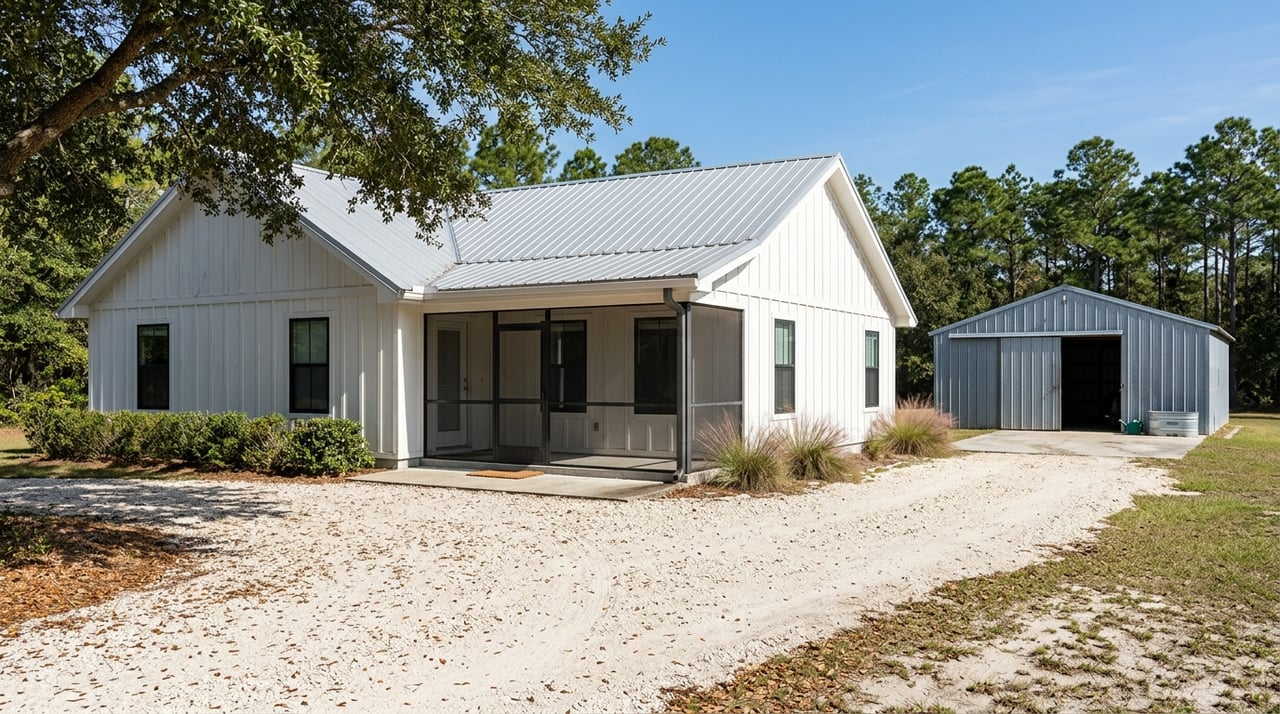
If you are dreaming about more land, more quiet, and room to spread out, Hastings may feel like a refreshing change of pace. Life on acreage here can offer the space and slower rhythm many buyers want, but it also comes with hands-on responsibilities that are easy to overlook at first. If you are considering country living in Hastings, this guide will help you understand what everyday life really looks like, what to verify before you buy, and how to decide whether the trade-offs fit your lifestyle. Let’s dive in.
Why Hastings Appeals to Acreage Buyers
Hastings is a small unincorporated community in St. Johns County, about 15 miles southwest of St. Augustine. The county describes it as the Potato Capital of Florida and a long-standing agricultural center known for potatoes, cabbage, and sod farming. That rural identity still shapes the way the area looks and feels today.
If you are comparing Hastings to more built-out parts of Northeast Florida, the biggest draw is usually space. You may find larger parcels, more separation from neighbors, and a day-to-day pace that feels calmer than a denser suburban setting. For many buyers, that is exactly the point.
At the same time, acreage living here is less about convenience and more about self-management. In Hastings, the lifestyle often includes more outdoor upkeep, more property systems to monitor, and more planning around roads, weather, and utility setup. That balance is important to understand before you make a move.
What Daily Life on Acreage Looks Like
Outdoor upkeep takes real planning
On a larger parcel, the yard is not just a yard. It is part of the property’s ongoing workload. You may be managing mowing, trimming, drainage patterns, open space, and the overall condition of the landscape throughout the year.
That is why Florida-Friendly Landscaping matters on acreage. UF/IFAS promotes it as a low-maintenance, environmentally sustainable approach that can save time, energy, and money for people maintaining their own property. On a larger homesite, thoughtful landscaping choices can make routine care much more manageable.
Drainage affects how your land functions
In a rural setting, drainage is not just a detail on a survey. It can affect how usable your land feels after heavy rain and how much maintenance the property needs over time. That is especially important if any work changes natural or man-made drainage patterns.
St. Johns County’s Development Review Division handles lot grading and drainage complaints, and the county requires stormwater permitting for work that affects drainage systems. If you are buying acreage, it helps to think beyond the house and pay attention to how water moves across the land.
Yard debris becomes part of the routine
Larger properties often generate more trimming, clearing, and haul-off decisions than a standard suburban lot. Tree limbs, brush, and general outdoor cleanup can become part of your regular to-do list, especially if you want to keep the property tidy and functional.
St. Johns County Solid Waste provides weekly curbside collection for residential units and operates transfer stations for household garbage, hazardous waste, white goods, and other disposal needs. For acreage owners, knowing your disposal options can make recurring property maintenance easier to manage.
Wells and Septic Are a Big Part of Rural Living
Private well care is ongoing
If a property relies on a private well, water service becomes more hands-on than a county utility account. Florida DOH recommends that private well owners test for bacteria and nitrate at least once a year. The state also advises buyers to ask about the well’s history and inspect the wellhead several times a year.
Location and setup matter too. Florida DOH says the well should be uphill from pollution sources such as septic systems, and the casing should sit above grade. In flood-prone areas, the casing should also be above the highest recorded flood level.
Septic maintenance should not be ignored
If the home uses septic, routine care matters just as much. Florida DOH recommends having septic tanks inspected and pumped every three to five years. The homebuyer guide also notes that voluntary septic inspections can be useful during negotiations because underground repairs can be expensive.
There are also rules tied to repairs and modifications. Florida DOH says work on onsite sewage systems requires a construction permit from the county environmental health office. During flooding, the state advises homeowners not to pump a septic tank dry and to wait until floodwater recedes before making repairs.
Getting Around From Hastings
Roads shape everyday convenience
In Hastings, the road network plays a big role in how daily life feels. County materials identify the community as roughly 15 miles southwest of St. Augustine, with access shaped by major routes including I-95, US 1, SR 16, SR 207, and SR A1A. SR 207, also known as Bill Pearce Highway, is one of the area’s key connections.
That matters for more than commuting. County evacuation guidance also points to SR 207 as an important route east toward I-95 or west into Putnam County. For buyers looking at acreage, road access is part of both daily convenience and storm planning.
Personal vehicles are usually the practical choice
Public transit does exist, but service is limited. St. Johns County says the Sunshine Bus system includes deviated fixed-route service in the St. Augustine urbanized area and reservation-based demand-response service for eligible riders. The county also notes bus shelters on Hastings Main Street just north of City Hall.
For many acreage households, though, a personal vehicle will likely be the more practical way to handle errands, appointments, and day-to-day travel. If you are moving from a more connected suburb, that is a lifestyle shift worth considering upfront.
Local Amenities That Support Rural Life
Community spaces add balance
One pleasant surprise for many buyers is that Hastings has more public infrastructure than they expect. The W.E. Harris Community Center at 400 E. Harris Street offers programming, rentals, a computer room, a weight room, a multipurpose field, playground space, and other amenities. The county describes it as a central gathering place for residents.
For a small rural community, spaces like this matter. They can help offset some of the isolation that sometimes comes with living on larger lots and farther from dense commercial areas.
Parks and public facilities help day-to-day living
Al Wilke Park, just off State Road 207 across from the Hastings Library, includes a community center, baseball field, basketball courts, unlighted tennis courts, a large multipurpose field, a playscape, a picnic area, and a pavilion. Railroad Park is also close to Main Street and offers a playground, pavilion, and gazebo.
The Hastings Branch Library is currently operating inside the W.E. Harris Community Center while the county works on a new Hastings Community Center and Library. The planned facility is expected to include a branch library, community center, and health and human services annex serving Hastings and the southwest part of the county.
Long-term investment is part of the picture
Hastings is also seeing public investment that may matter to residents over time. St. Johns County and the school district are restoring Historic Hastings High School into a First Coast Technical College campus. The first phase is expected in 2026, with planned programs including adult education, GED preparation, English as a Second Language, medical assisting, and cosmetology.
That kind of long-range investment does not change the rural feel overnight. What it can do is add useful community infrastructure and reinforce Hastings as a place with ongoing county attention and planning.
What to Verify Before Buying Acreage
Start with allowed uses
One of the biggest mistakes acreage buyers make is focusing only on lot size. A larger parcel may look flexible, but what you can actually do with it depends on zoning, overlays, and county rules. If you are thinking about animals, a barn, a workshop, a fence, a pool, or future additions, you need to verify those details early.
St. Johns County’s Development Review Division handles permitting tied to land development codes, driveway permits, flood-zone determinations, drainage issues, and stormwater matters. The county also notes that understanding what is allowable can save you time and money.
Confirm zoning and overlay details
Because Hastings has an overlay district layered over multiple zoning districts, buyers should confirm the parcel’s exact zoning and any additional rules that may apply. County guidance also notes that some uses require special approval, and fences have height and placement rules. Pools generally require fencing as well.
This is one of the most important steps in the process. What looks like a perfect rural property can become much less appealing if your intended use does not match county requirements.
Check water and wastewater service
Do not assume a rural home is on county utilities, and do not assume it is not. St. Johns County Utilities serves drinking water, wastewater, and reclaimed water customers in portions of the county and maintains tools and maps for service verification.
For acreage properties, the key question is simple: is the home connected to county utility service, or does it rely on a private well and septic system? That answer will shape both your maintenance responsibilities and your due diligence.
Review well and septic records carefully
If the property has a private well, Florida DOH says there is no state requirement for routine testing when a private home is sold, but it strongly recommends annual bacteria and nitrate testing. Buyers should also ask for the well’s history and maintenance records.
If the property has septic, the state’s homebuyer guidance recommends a voluntary inspection, pumping and visual inspection of the tank, and a review of the drainfield condition before closing. These are practical steps that can help you avoid major surprises after move-in.
Think like a systems buyer
With acreage, the smartest approach is to look at the property as a whole system. The house matters, of course, but so do road access, drainage, water setup, wastewater setup, and storm recovery considerations. In a place like Hastings, these pieces can have just as much impact on your day-to-day experience as square footage or interior finishes.
That is often what separates a great acreage purchase from a frustrating one. When you know how the land works, what the systems require, and what the parcel allows, you can make a much more confident decision.
Is Hastings Acreage Right for You?
Hastings can be a great fit if you want elbow room, a rural setting, and a slower daily rhythm within St. Johns County. It may especially appeal to buyers who value land, privacy, and a more hands-on property lifestyle. The setting is rooted in agriculture, and that character is a big part of what makes the area distinct.
It may be less ideal if you want close-in convenience, minimal exterior maintenance, or fully urban-style services right outside your door. Acreage living here is rewarding for the right buyer, but it works best when you go in with clear expectations about upkeep, utilities, drainage, and road access.
If you are exploring acreage in Hastings or comparing rural options across the broader St. Augustine and Palm Coast area, working with a local advisor can help you ask better questions before you commit. When you are ready to talk through property fit, land use, or your next move, connect with David Stanley.
FAQs
What is everyday life on acreage in Hastings like?
- Everyday life on acreage in Hastings often includes more outdoor upkeep, more attention to drainage and landscape planning, and more hands-on management of property systems than you would typically have on a smaller suburban lot.
Do Hastings acreage homes usually have private wells and septic systems?
- Some rural properties in Hastings rely on private wells and septic systems, so buyers should verify utility service for each parcel and review well history, testing, and septic condition before closing.
What should buyers verify before purchasing acreage in Hastings?
- Buyers should confirm zoning, overlay rules, allowed uses, utility setup, drainage conditions, road access, and any permitting issues that could affect fences, outbuildings, additions, pools, or other plans for the property.
How important is SR 207 for living in Hastings?
- SR 207 is one of the key routes connecting Hastings to surrounding areas, and county materials show it plays an important role in both everyday travel and evacuation planning.
Are there local amenities in Hastings that support rural residents?
- Yes. Hastings has community amenities including the W.E. Harris Community Center, Al Wilke Park, Railroad Park, and library services operating through the community center while a new facility is in development.